

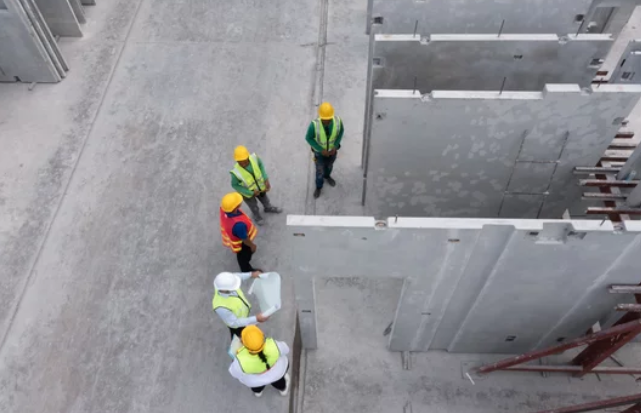
Most precast plant owners have lived some version of this. The insurance carrier schedules its annual loss-control visit. The week before, the plant manager has the crew sweep the aisles, restock the first aid cabinets, and update the training binder. The walk-through goes fine. A few minor findings, a signature, and everyone goes back to work. Industrial safety audits handled that way check a box. They rarely change anything.
A few months later, a maintenance tech reaches into the discharge area of a mixer to clear a hang-up on second shift. The disconnect is at the other end of the platform and the line is already behind. He walks away with a bruised hand. The pour schedule is not so lucky. The line sits idle for half a shift while supervisors sort out what happened, and the rest of the week runs behind.
Nothing about that incident was hidden. The same conditions that put a hand near a moving gate also slow down cleanouts, stretch changeovers, and burn hours nobody tracks. That is the part most owners miss. A well-run safety audit is one of the cheapest operational reviews a plant can buy.
Why Industrial Safety Audits Usually Get Treated as Paperwork
The reason most industrial safety audits get filed away is simple. They tend to be owned by someone outside production. The carrier runs one. An outside consultant runs one. The safety coordinator, if the plant has one, runs one alongside three other jobs. The findings land in a report, the report lands in a folder, and production leadership sees a list of things that cost money and slow the line down.
That framing does real damage. When a finding is viewed as overhead, it gets the cheapest possible patch, or it waits until next year. When the audit focuses on documentation, it measures whether training was recorded, not whether people work safely when the schedule gets tight.
There is also a timing problem. Most audits happen on a good day. The plant is clean, the crew knows someone is watching, and the hardest tasks of the week are not running. The audit sees the plant at its best and reports on that version.
What a Safety Finding Actually Tells You
Every safety finding points to something about how work gets done. A missing guard usually means the guard got in the way of a maintenance task and nobody solved the access problem. A lockout procedure people skip usually means the procedure does not fit the way the plant actually runs. Clutter in a walkway usually means material flow does not have a home.
Read that way, a safety finding is an operational finding with a safety label on it. The guard came off because a cleanout takes too long with it on. The lockout gets skipped because the isolation points are badly located, or because the production plan leaves no room to do the job right. The clutter exists because forms, inserts, and hardware arrive faster than they get staged.
Fix the underlying condition and you usually get two results. The hazard goes away, and the task gets faster or more predictable. That second result is where the profit sits, and it is why industrial safety audits deserve a seat in operations meetings, not only in the safety file.
Where Industrial Safety Audits and Plant Performance Overlap
In precast and concrete products plants, industrial safety audits keep surfacing issues in the same handful of places.
Lockout and machine guarding come first. Mixers, skip hoists, conveyors, and aggregate bins all need regular cleanout and maintenance. When isolation is clumsy, crews take shortcuts. When guards are hard to remove and replace, they stay off. Both categories also show up near the top of federal inspection citations year after year. A plant that designs for fast, safe access cuts cleanout time and regulatory exposure at the same time.
Material handling and crane work come next. Stripping, flipping, and yard handling move heavy loads close to people. Worn rigging, inconsistent lifting inserts, and yard layouts that force awkward picks all raise risk. They also raise handling damage, which shows up later as patching labor and rejected product.
Housekeeping and flow matter more than most owners give them credit for. Concrete buildup on platforms and walkways is a slip hazard and a sign that spillage is not controlled at the source. Overloaded aisles mean forklifts and pedestrians share space they should not. Both slow movement across the floor.
Dust and air quality deserve attention in any plant that cuts, grinds, or batches. Respirable silica is a compliance exposure, and undersized or poorly maintained dust collection is usually a maintenance problem too. The same dust works its way into bearings, sensors, and electrical cabinets.
Equipment condition rounds out the list. Worn chains, leaking hydraulics, and failing interlocks are safety findings. They are also early warnings of the next breakdown. Anyone who has tallied the real cost of equipment downtime knows an unplanned stop costs far more than the part that failed.
How to Run Industrial Safety Audits That Pay for Themselves
A useful industrial safety audit does not require a large safety department. It requires a different approach to the walk.
Walk the process, not the building. Follow the product from aggregate receiving through batching, casting, curing, stripping, finishing, and yard storage. Look hard at each handoff. Most hazards and most delays sit at the transitions between steps.
Audit the work, not the paperwork. Watch real tasks on a normal day, including the ones people dislike: mixer cleanout, form changeovers, end-of-shift washdown. Ask operators to show how they actually do the job. The gap between the written procedure and the real method is the most valuable thing an audit can find.
Bring operators and maintenance into the walk. The people doing the work know where the shortcuts live and why they exist. When they help identify the problem, they help design a fix that sticks.
Rank findings by risk and by production impact. A two-column view changes the conversation with ownership. Some findings carry high risk and little production impact, and those get fixed immediately regardless. Others carry moderate risk and high production impact, and those are the ones that pay for the whole program. A redesigned isolation point that turns a forty-minute cleanout into fifteen minutes gets funded faster than a line item labeled “safety improvement.”
Assign an owner and a date to every item. Findings without names attached do not get closed. This is the same execution discipline on the plant floor that separates plants that improve from plants that read the same report every year.
Make sure the fix can be sustained. A replacement guard is only a fix if the next one is on the shelf when it gets damaged. Interlock switches, guard hardware, lockout devices, and rigging belong in your spare parts inventory with minimum and maximum levels like any other critical component.
Set a cadence that fits the plant. A full walk once or twice a year, plus a short focused audit each month on one area or one task, keeps the program alive without burying the team.
The Cost of Waiting
Plants that treat industrial safety audits as a compliance exercise pay for it in ways that rarely show up together on one report.
There is the direct cost of incidents: medical expenses, lost time, and investigation hours. There is the insurance cost, because experience modifiers follow incident history for years and shape both premiums and the ability to bid certain work. Many general contractors and public owners screen suppliers on safety records, so a weak history can quietly take a plant out of consideration.
Then there is the cost nobody books. The extra twenty minutes on every cleanout. The forklift that waits because the aisle is blocked. The skilled operator who leaves because the plant feels careless. The breakdown that a worn component predicted months earlier.
None of these feel urgent on any single day. Added up over a year, they often exceed the cost of fixing the conditions behind them.
What Good Looks Like Twelve Months In
A plant that runs industrial safety audits as an operating tool looks different within a year. Cleanouts and changeovers follow a standard method that is both safe and quick. Guards and interlocks stay on because maintenance can work around them. The yard has defined lanes and staging areas. Supervisors talk about near misses openly because those reports lead to fixes, not blame.
The audit report changes too. Repeat findings drop off. The list gets shorter and more specific. Ownership starts to see the audit as a source of ideas for throughput and cost, not a bill from the safety function.
Leadership sets the pace. When the owner walks the floor during an audit and asks why a task is done a certain way, the crew pays attention. When the owner only reads the summary, the crew assumes it is paperwork.
Making Industrial Safety Audits Part of How the Plant Runs
Industrial safety audits will never be the most exciting item on an owner’s calendar. They do not need to be. They need to be honest, focused on real work, and tied to the same decisions you already make about throughput, maintenance, and capital.
Treat every finding as a question about how the plant operates. Rank fixes by risk and by production value. Put names and dates on them, then hold the line until they close.
If the findings point back to equipment access, isolation design, or condition, that is work Truliance Industrial Services does on plant floors every week. Either way, run the audit like it matters. Done consistently, it stops being a chore and becomes one of the most reliable tools you have for a safer, steadier, more profitable plant.